
Authors: Lany L. Maceda (Bicol University), Jennifer L. Llovido (Bicol University), John Raymond B. Barajas (Bicol University), and Frei Sangil (Layertech Labs)
Athens, Greece | September 23–25, 2026 — Bicol University, in collaboration with Layertech Labs, presented a joint research paper entitled “Data Mining of Philippine Governance Using Budget Allocation and FOI Records” at the 6th International Conference on Novel & Intelligent Digital Systems (NiDS 2026), held in Athens, Greece, from September 23 to 25, 2026.
Overview
How are public resources distributed across the country, how accessible is government information, and what issues dominate public discussions about governance?
A collaborative study by Bicol University and Layertech Labs examines these questions through the analysis of three public datasets covering different aspects of Philippine governance. The research brings together six years of General Appropriations Act (GAA) budget allocations, 6,815 electronic Freedom of Information (eFOI) transactions, and 12,485 multilingual social media comments.
Using data mining, statistical analysis, and natural language processing (NLP), the study examines regional spending patterns, differences in FOI request outcomes across government agencies, and the topics and sentiments expressed in online discussions.
Key Findings
The analysis revealed several patterns across the three datasets, offering a closer look at how government spending, information access, and public discourse are reflected in available data.
1. Regional Spending and GAA Budget Trends
- Concentration of Public Spending: Association rule analysis identified recurring relationships between high-value government transactions, the Department of Public Works and Highways (DPWH), and Capital Outlays. These patterns point to the significant role of infrastructure-related spending in the analyzed budget records, including allocations associated with the Build Better More agenda.
- Regional Disparities: Budget allocations were concentrated in the country’s largest economic and administrative regions. The National Capital Region (NCR) consistently ranked highest, followed by CALABARZON and Central Luzon, although the rankings varied across the six-year period.
- Projected Budget Growth: Historical GAA allocations from 2020 to 2025 showed an upward trend. A linear regression model was used to project allocations through 2030, indicating continued growth if historical patterns persist. These projections represent estimated trends rather than confirmed future budget figures.
2. The eFOI Transparency Landscape
- Overall Request Outcomes: Of the 6,815 recorded eFOI transactions, 59.77% were successfully processed, while 23.40% were denied. The remaining transactions were classified as pending or acknowledged.
- Differences Across Agencies: FOI outcomes varied considerably among government institutions. The Department of Health (DOH) recorded the highest transaction volume, with 961 requests and an 86.9% success rate. Meanwhile, the Department of Public Works and Highways (DPWH) recorded 171 denied requests. NAMRIA and the Department of the Interior and Local Government (DILG) also had denial counts exceeding their successful issuances.
These differences highlight the need to examine how agencies handle information requests, particularly in relation to their respective disclosure procedures, administrative requirements, and record-management practices.
3. Public Sentiment and Online Discourse
- Sentiment Distribution: Researchers used the CardiffNLP XLM-RoBERTa multilingual model to classify 12,485 comments gathered from TikTok, Facebook, and YouTube. Neutral comments accounted for the largest share, followed by negative and positive sentiments.
- Increased Public Discussion: Comment activity across the analyzed platforms increased during major government budget controversies in 2025, including congressional budget reviews and discussions surrounding public health reserve fund transfers. The findings show how these events coincided with increased online engagement.
- Topics in Public Discussion: Topic modeling and keyword analysis identified public funds, healthcare, infrastructure, and government assistance among the frequently discussed subjects. References to political figures and government agencies also appeared in the discussions, suggesting that citizens often associate broader governance issues with the officials and institutions involved.
Recommendations Based on the Findings
The study provides a descriptive account of patterns found in public budget records, FOI transactions, and social media discussions. Rather than serving as a performance audit of government agencies, its findings offer a basis for further examination and practical improvements.
The researchers identify four areas where the results can inform future action:
- Benchmark and Standardize FOI Practices: Agencies with higher FOI success rates can serve as references for reviewing existing procedures and identifying practices that may help streamline information requests across government institutions.
- Review Regional Budget Allocations: The concentration of funding in major regions provides a basis for examining how allocation frameworks address infrastructure and public service needs in other parts of the country.
- Monitor Public Feedback: Natural language processing and sentiment analysis can help track recurring public concerns and changes in online discussions surrounding government programs and policies.
- Complement Data Analysis with Case Reviews: Quantitative findings should be examined alongside individual agency cases and qualitative reviews to better understand the administrative and legal circumstances behind the observed results.
Explore the Infographics
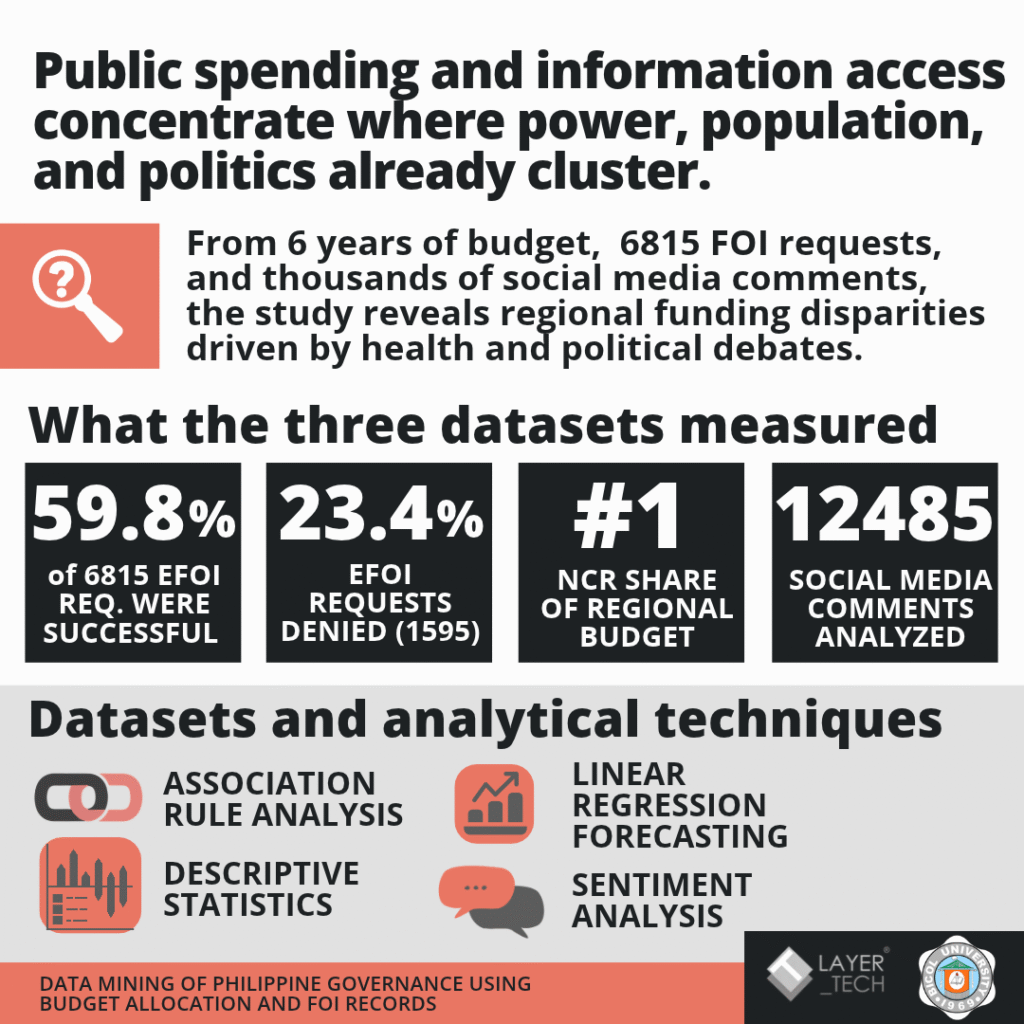
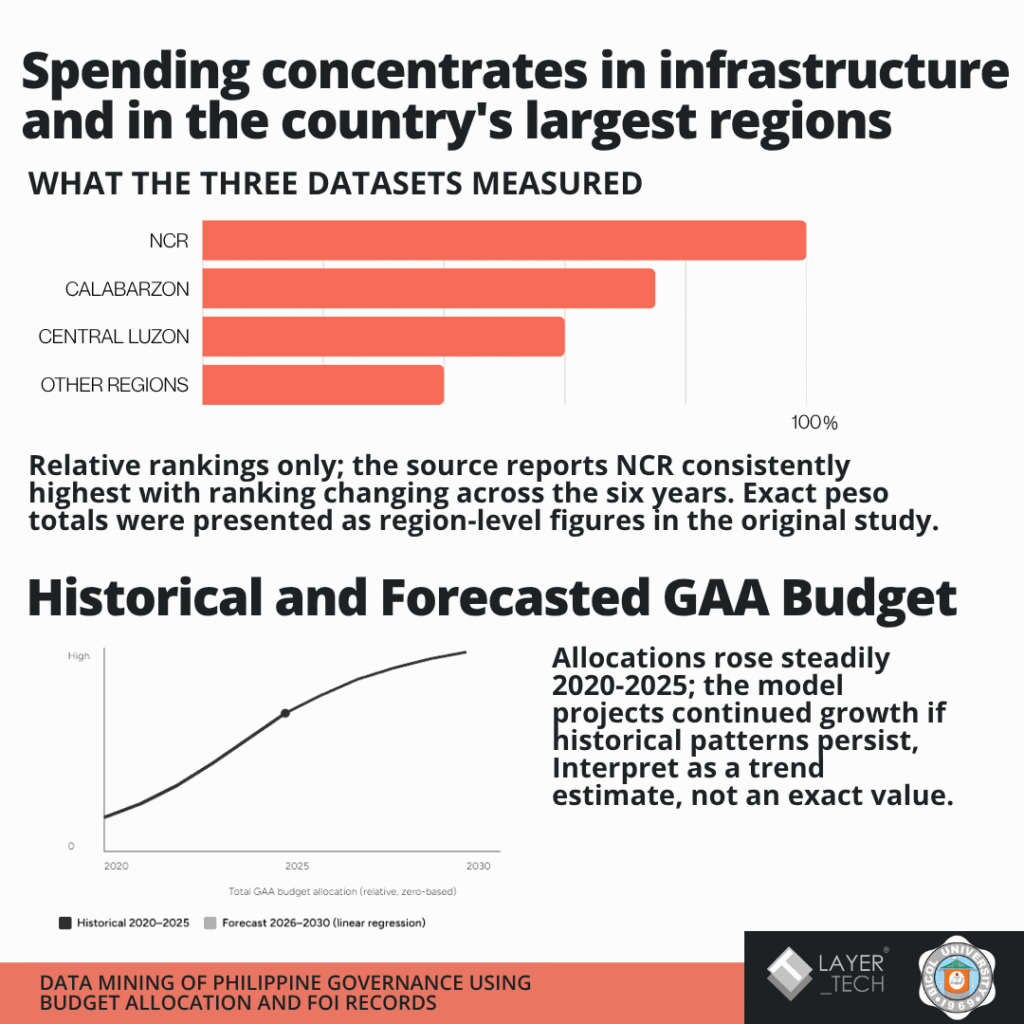
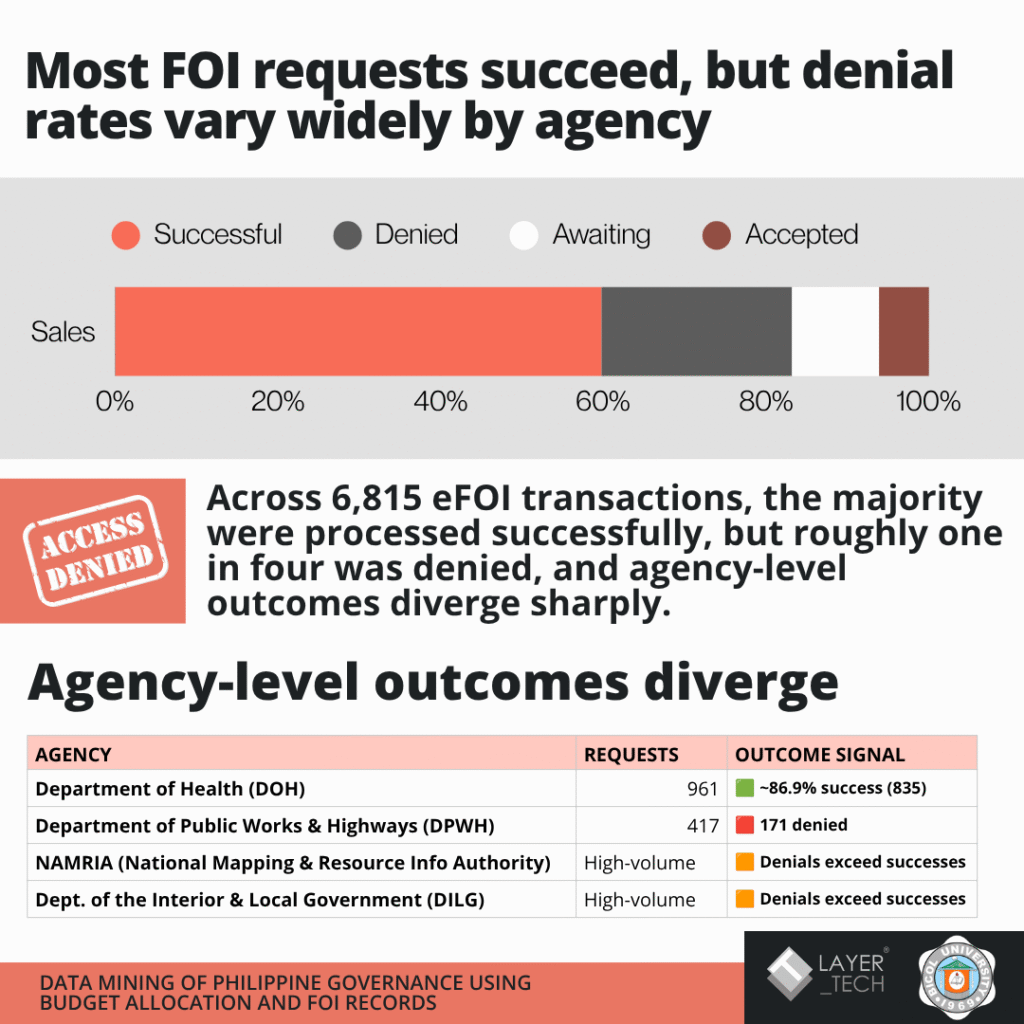
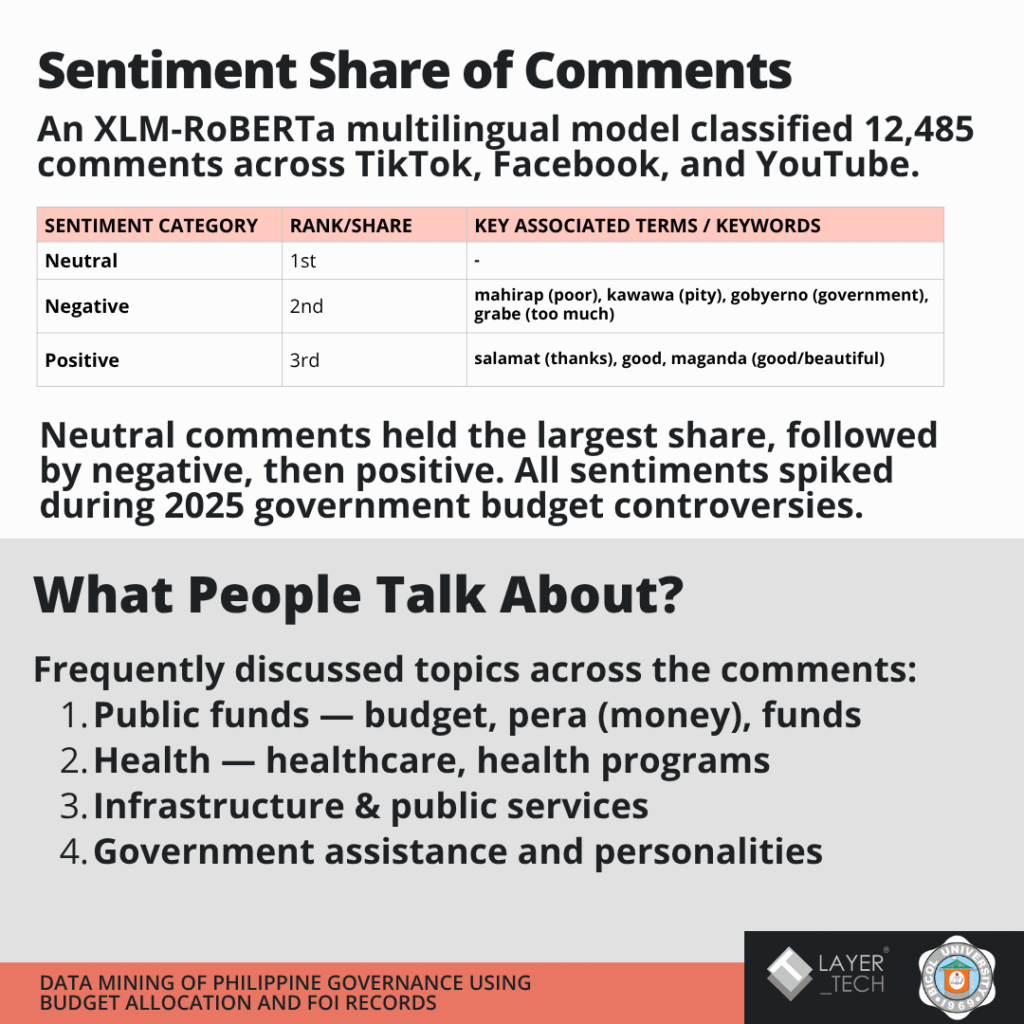
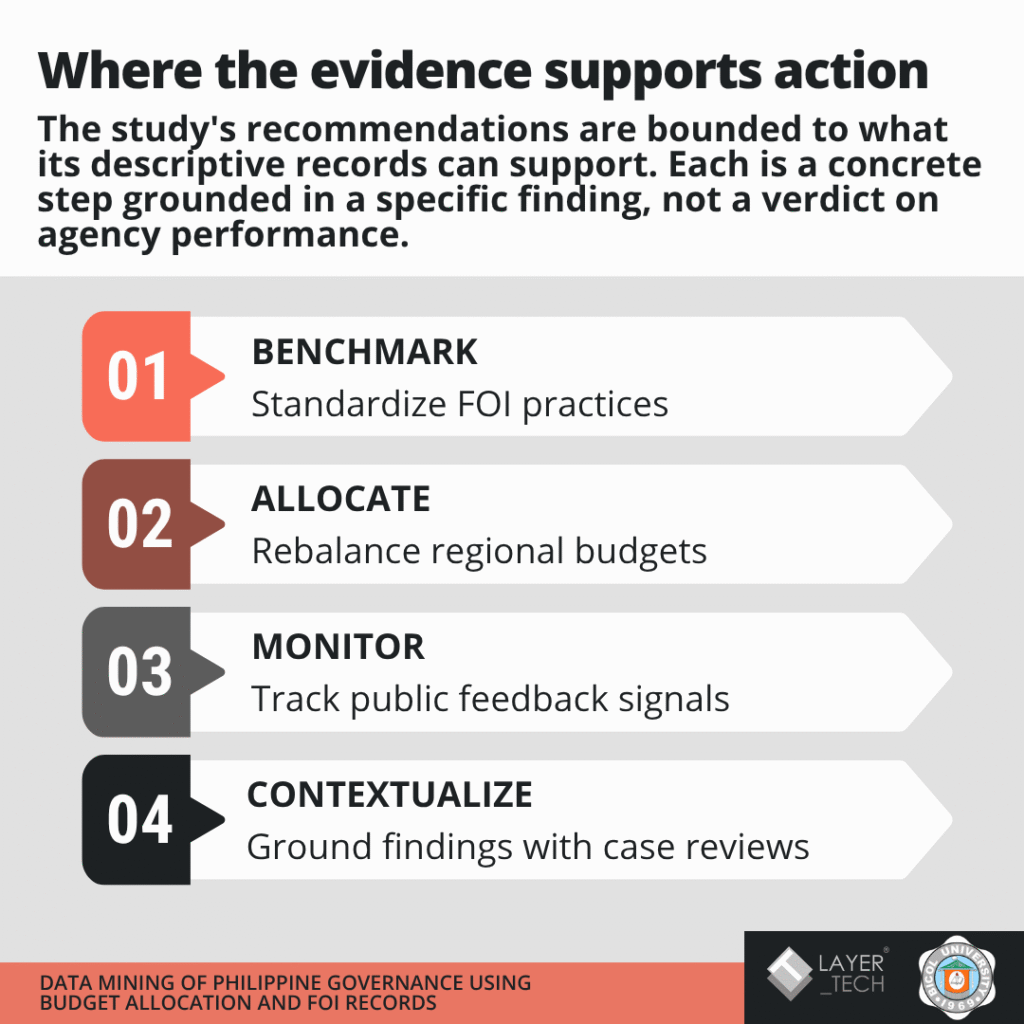
The infographics accompanying this study present an overview of the datasets, analytical methods, regional budget patterns, eFOI outcomes, and public sentiment findings, along with the recommendations drawn from the research.